The Habits of Successful Actors: Becoming Your Agent’s Favorite Client
One of the biggest misconceptions in the entertainment industry is that getting an agent or manager means you've finally made it.
You haven't.
In many ways, representation is simply the beginning.
After years of working with actors, parents, agents, and managers, I've noticed a common pattern: some families sign with a representative and immediately shift into waiting mode.
Waiting for auditions.
Waiting for opportunities.
Waiting for their rep to make something happen.
That's not how successful careers are built.
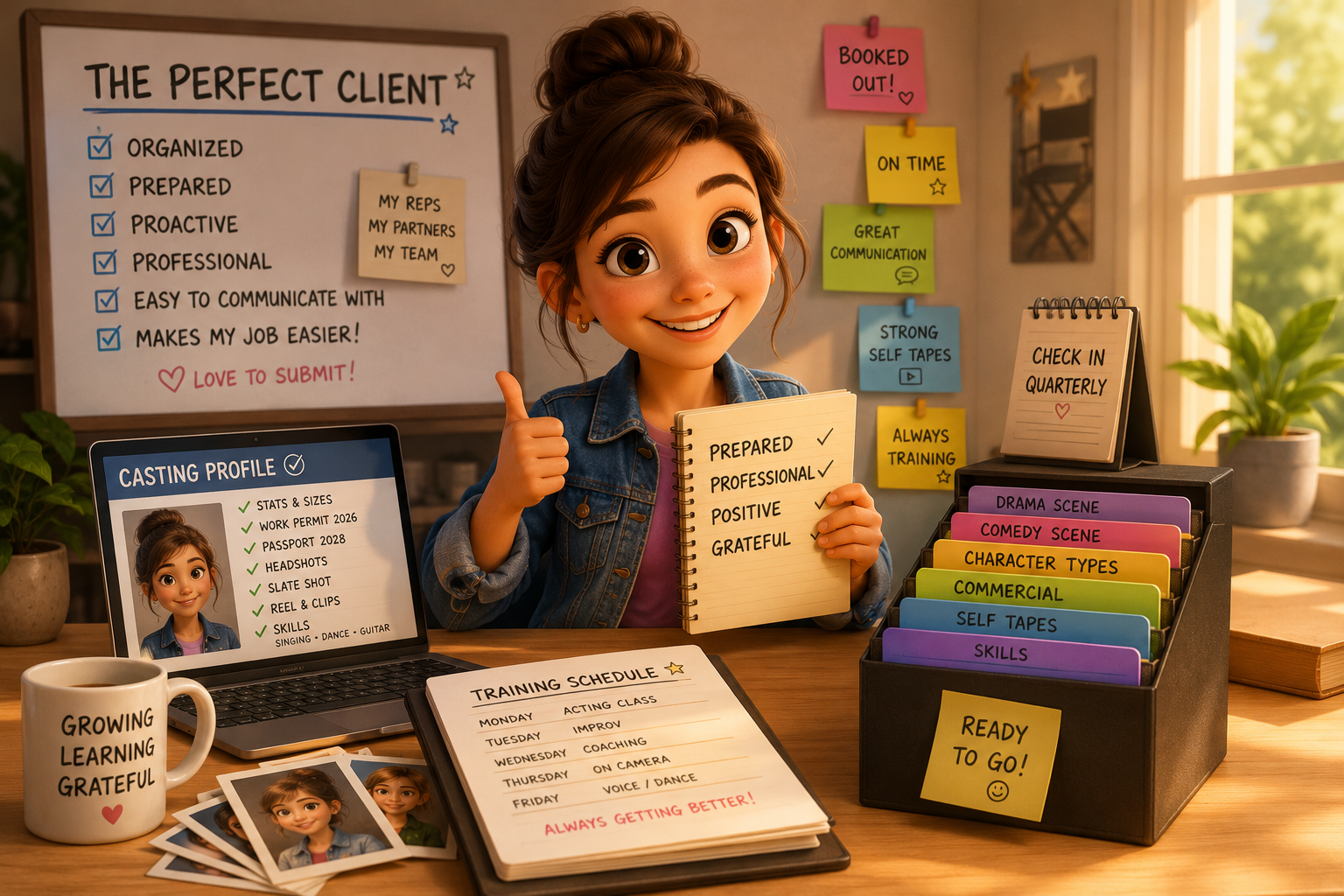
The reality is that actors are responsible for the vast majority of the effort in their careers. Your representative can submit, pitch, negotiate, strategize, and advocate for you. But they cannot create materials that don't exist, maintain information they don't have, or prepare you for opportunities you aren't ready for.
The clients that agents and managers love working with aren't necessarily the most talented.
They're the most prepared.
They're organized.
They're responsive.
They're proactive.
Most importantly, they make their representative's job easier.
If you want to become the client your rep is excited to submit, here are some habits that make a tremendous difference.
Keep Your Casting Profiles Updated
This sounds obvious, yet it's one of the most common issues representatives encounter.
Your casting profiles should always be current, accurate, and complete.
That includes:
- Height and weight
- Clothing sizes
- Shoe size
- Contact information
- Union status
- Work permit expiration dates
- Passport expiration dates
- Local hire markets
- Special skills
When something changes, update it immediately.
Don't wait until your next audition.
Don't wait until your next booking.
Don't assume your representative already knows.
Actors who consistently update their materials are easier to submit and easier to pitch.
Have Strong Acting Samples Available
One of the biggest mistakes actors make is assuming their booked work is enough.
Sometimes it isn't.
In fact, some actors have stronger self-tape footage than footage from projects they've booked.
Your representative should always have quality examples of your work available.
At a minimum, every actor should have:
A strong dramatic scene
A strong comedic scene
Ideally, these should be professionally coached self-tape style scenes that showcase what you currently do best.
Beyond that, consider creating additional clips that demonstrate different character types and genres.
Can you play:
The funny best friend?
The troubled teen?
The awkward genius?
The bully?
The athlete?
The quirky outsider?
Give your representatives tools they can use when pitching you.
The easier it is for them to show what you can do, the more opportunities they can pursue.
Keep Your Headshots Fresh
Headshots are not a one-time purchase.
They are marketing materials.
If your headshots are more than a year old, it's time to evaluate whether they're still accurately representing you.
Young actors especially change quickly.
As a general rule, consider scheduling a mini headshot session every six to eight months to keep your materials current.
Ideally, actors should have multiple marketable looks available.
This might include:
Commercial
Theatrical
Light theatrical
Character-specific looks
Upscale
Downscale
Most actors benefit from having somewhere between three and seven strong headshots that accurately represent the types of roles they're being submitted for.
Most importantly, make sure your representative approves of your selections.
The goal isn't choosing your favorite photo.
The goal is choosing the photos that help you book work.
Book Out Early and Often
One of the easiest ways to become a reliable client is to consistently communicate your availability.
Your representatives assume you're available unless you've told them otherwise.
Book outs are not a bother.
Use them.
Family vacation?
Book out.
School trip?
Book out.
Dance competition?
Book out.
Dental appointment?
Book out.
Half-day absence?
Book out.
Develop the habit of communicating availability before it becomes a problem.
If you're traveling but still capable of self-taping, let your representatives know that too.
Clear communication prevents missed opportunities and avoids unnecessary frustration for everyone involved.
Be Honest About Local Hire Status
This one is important.
If you claim to be a local hire in a market, mean it.
Being a local hire means you can travel to that market on short notice and handle your own accommodations without creating complications for production.
There should be no hidden conditions.
No surprise limitations.
No last-minute negotiations.
Many actors overpromise because they want to appear more dedicated.
Unfortunately, when those promises come with caveats, it puts their representatives in a difficult position.
Honesty builds trust.
Trust gets opportunities.
Don't Accept Auditions You Can't Fully Commit To
It's okay to say no.
Seriously.
If your child is sick, overwhelmed, exhausted, unprepared, or dealing with significant schedule conflicts, it may be better to decline an audition than submit work that doesn't represent their best effort.
The same applies to projects that conflict with your family's values, comfort level, beliefs, or emotional boundaries.
You are allowed to have limits.
Declining an audition does not make you difficult.
It does not make you ungrateful.
It does not make you picky.
Professional actors make business decisions every day.
Your representative would much rather know upfront than discover concerns after you've been called back.
Manage Your Expectations
One of the healthiest things you can do after signing with representation is remember that your agent or manager chose you.
They are already investing their time, relationships, and effort into your career.
Try not to assume that silence means nothing is happening.
The industry is filled with variables that actors never see.
Projects disappear.
Roles get rewritten.
Networks shift priorities.
Productions move locations.
Casting offices change direction.
Entire shows get canceled.
Much of what affects your career happens completely outside of your representative's control.
Be patient.
Be prepared.
Trust the process.
A quarterly check-in is perfectly reasonable.
Ask questions.
Seek guidance.
Most importantly, ask:
"What can I provide that would make submitting and pitching easier?"
Representatives love hearing that question.
Turn Auditions In Early
Professionalism starts long before you book a role.
Whenever possible, submit auditions before the deadline.
Early submissions create opportunities for:
Notes
Adjustments
Retakes
Technical corrections
If a genuine issue prevents you from meeting a deadline, communicate immediately.
Don't disappear.
Don't wait until the last minute.
Ask whether an extension is possible.
Your representative will often do their best to help.
The earlier they know, the more options they have.
Show Up Prepared for Callbacks
Whether a callback is virtual or in person, punctuality matters.
Be early.
Be ready.
Know the material.
Have your technology tested.
Have wardrobe prepared.
Have questions answered beforehand.
And after the callback?
Send your representative a quick update.
Let them know how it went.
Share any useful information.
Representatives appreciate staying informed throughout the process.
Stay In Training
The actors who consistently work are usually the actors who consistently train.
Ideally, actors should be training at least twice per week.
That could look like:
Acting class plus improv
Acting class plus voice training
Acting class plus on-camera training
Private coaching plus specialty classes
Training keeps your skills sharp.
It expands your range.
It builds confidence.
Most importantly, it keeps you growing.
Prepare Like a Professional
Big opportunities deserve preparation.
Anything above a co-star role can dramatically impact an actor's career trajectory.
Don't simply memorize lines and hope for the best.
Develop a strategy.
Break down the material.
Understand the character.
Identify relationships, objectives, obstacles, and emotional shifts.
Work with a coach whenever possible.
And if coaching isn't available, seek feedback and use tools that help strengthen your preparation process.
Preparation creates confidence.
Confidence creates freedom.
Freedom creates great auditions.

“This is GOLD!” parents have responded.
Get a custom audition prep guide from your casting sides that helps your actor analyze the scene, understand the subtext, and strategize being memorable with bold choice suggestions. Try your first one for free use code FREE101
Be Memorable
Safe choices rarely build careers.
Your representative didn't sign you so you could blend in.
They signed you because they saw something unique.
Lean into that.
Bring specificity.
Bring personality.
Bring bold choices.
Bring charisma.
Casting directors notice actors who make strong, interesting decisions.
And when casting remembers you, they tell agents and managers.
Even when you don't book.
You can't go wrong being memorable.
You can absolutely go wrong being forgettable.
Update. Update. Update.
Your career is constantly changing.
So keep your representatives informed.
Update them when:
Look changes
Sizes change
You move
Your actor gain new skills
They achieve major milestones
Your priorities shift
Your availability changes
Never assume they already know.
Communication is part of being a professional actor.
Gratitude Matters
Finally, remember that representation is a partnership.
The strongest client-representative relationships are built on trust, communication, professionalism, and mutual respect.
Be positive.
Be cooperative.
Be prepared.
Be appreciative.
Let your representatives know you value their efforts.
Respond promptly.
Deliver what they need before they have to ask.
Make their job easier whenever possible.
Because at the end of the day, becoming your agent's favorite client isn't about being perfect.
It's about being dependable.
And in this industry, dependable is incredibly valuable.