The New Hollywood Casting Scam Every Parent Needs to Know About
“Congratulations! We’d love to consider your child for a major streaming series.”
For many parents, those words would feel like a dream come true.
Unfortunately, for a growing number of actors, they’re becoming the opening line of an elaborate scam.
A recent investigation by The Hollywood Reporter (“You’d Be Perfect for This!” Inside the Devious Casting Scam Sweeping Hollywood) uncovered an alarming trend sweeping the entertainment industry: scammers are impersonating some of Hollywood’s biggest casting directors using convincing emails, professional language, fake contracts, NDAs, AI-generated communications, and even cloned voices.
They’re targeting actors who are chasing the same dream your family may be pursuing.
And they’re getting frighteningly good at it.
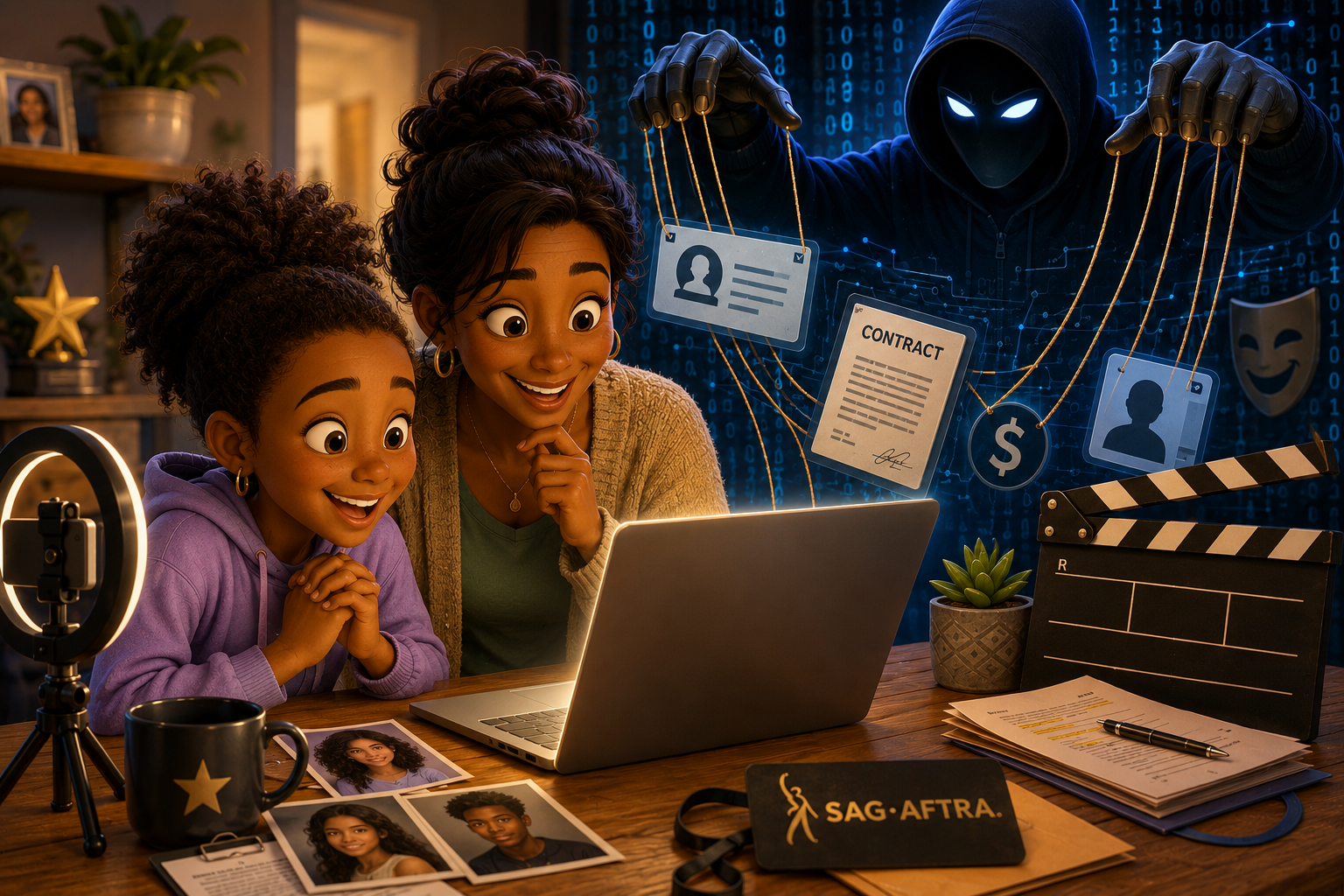
This Isn’t the Old: “Pay Me to Audition” Scam
Years ago, scams were easy to spot.
Someone would promise fame if you paid hundreds or thousands of dollars upfront for classes, photos, or representation.
Today’s scammers have evolved.
Instead of pretending to be talent agents, they’re impersonating real casting directors. They’re using real names, referencing legitimate productions, and borrowing the credibility of major studios and streaming platforms.
Some even ask actors to submit self-tapes, provide thoughtful feedback, and continue conversations for days—or even weeks—before ever mentioning money.
How the Scam Works
The pattern is surprisingly consistent.
A well-known casting director reaches out by email or social media.
They ask for a headshot, résumé, reel, or self-tape.
They compliment the performance.
They tell the actor they’ve been selected or are a finalist.
They explain there’s one final hurdle…
They request money.
Usually they claim the payment is for:
SAG-AFTRA initiation fees
Union paperwork
Contract processing
Administrative costs
Registration fees
Sometimes they’ll even introduce a fake union representative to make everything appear legitimate.
By this point, many actors have become emotionally invested.
That’s exactly what the scammers are counting on.
Why This Scam Is So Convincing
Here’s the uncomfortable truth.
Real casting often does look unusual.
Casting directors sometimes:
use Gmail addresses
request NDAs before sharing project details
ask for self-tapes
provide little information initially
discover actors through casting websites or social media
Scammers understand this.
They’re no longer sending obviously fake emails full of spelling mistakes.
They’re studying how casting actually works.
Some are reportedly using AI to write professional emails.
Others have begun cloning voices to convince actors they’re speaking with the real casting director.
That should concern everyone in this industry.

The Biggest Red Flag
Let me make this incredibly simple.
Professional casting directors do not ask actors for money.
Ever.
Not for auditions.
Not to be considered.
Not to secure a role.
Not for “processing.”
Not for union eligibility.
Not for paperwork.
If money enters the conversation before your child has actually been hired, stop immediately.
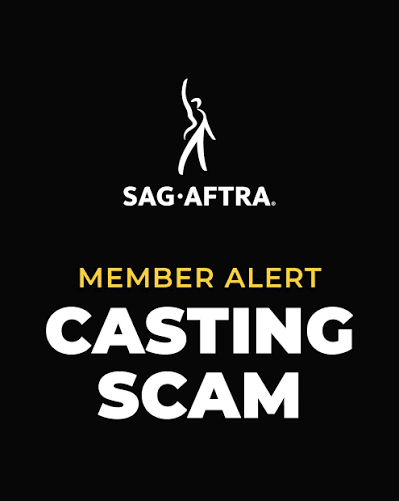
Official SAG-AFTRA Scam Alert
Watch for these red flags:
You’re asked to send money. Legitimate casting opportunities never require actors to pay for a role.
You’re asked to pay travel expenses or upfront costs.
Someone claims they need to pay a SAG-AFTRA joining fee on your behalf. SAG-AFTRA will never ask a third party to collect or pay your initiation fee.
The email claims to be from SAG-AFTRA but isn’t from an official @sagaftra.org email address.
If something feels off, stop and verify it before responding.
SAG-AFTRA encourages performers to contact info@sagaftra.org if they have concerns about a casting opportunity.
If you’ve been targeted by a scam, report to:
ReportFraud.ftc.gov (Federal Trade Commission)
IC3.gov (FBI Internet Crime Complaint Center)
Understanding SAG-AFTRA
One of the most common lies scammers are telling involves union membership.
Here’s how it really works.
You don’t simply pay money and become a SAG-AFTRA member.
Actors generally become eligible after working a qualifying union job or through specific eligibility pathways established by the union.
The initiation fee comes after legitimate eligibility—not before.
No real production hires an actor and then asks them to send thousands of dollars through Cash App, PayPal, Zelle, Venmo, or a random bank account.
That alone should end the conversation.
Why Parents Are Especially Vulnerable
One of the reasons these scams are so effective is because they prey on something every acting family has in common: hope.
Most parents have invested years driving to classes, filming self-tapes, updating headshots, paying for training, and helping their child navigate an industry filled with more rejection than success. When an email suddenly arrives saying, “We’d love to cast your child,” it’s completely understandable that excitement kicks in before skepticism does.
That’s exactly what the scammers are counting on.
They’re not taking advantage of a lack of knowledge. They’re taking advantage of hope.
By the time they ask for money, they’ve often spent days—or even weeks—building trust through auditions, feedback, contracts, and conversations that closely resemble a legitimate casting process.
The best protection isn’t becoming cynical. It’s slowing down long enough to verify the opportunity before taking the next step.
What Parents Should Do Before Responding
Whenever you receive an unexpected opportunity, the first thing to do is slow down. Scammers want you making emotional decisions before you’ve had time to verify the opportunity.
Before sending anything, ask yourself:
Does my child’s agent or manager know about this?
Can I verify this casting office independently?
Is the email address legitimate?
Am I being asked to pay anything?
Does anything feel rushed?
If something doesn’t feel right…
Stop. Verify first.
There is no legitimate opportunity that requires immediate payment.
One More Reason Representation Matters
One of the overlooked benefits of having experienced representation isn’t simply getting auditions.
It’s having someone to ask.
Every week, managers and agents receive suspicious emails from families wondering whether something is legitimate.
I’d much rather spend five minutes confirming an opportunity is fake than watch a family lose thousands of dollars—or worse, have their hopes manipulated by someone exploiting their dream.
Sometimes the most valuable service a representative provides is saying:
“Delete it.”
My Final Thoughts On This…
The entertainment industry has always attracted scammers. What’s changed is how believable they’ve become.
Artificial intelligence has made it easier than ever to impersonate real people, create convincing emails and paperwork, and manufacture opportunities that feel legitimate from the very first message. As these tools continue to improve, it’s safe to assume these scams will become even more sophisticated.
Fortunately, the fundamentals of this business haven’t changed. Casting directors are looking for talented actors. They are not asking families to send money.
If an opportunity suddenly shifts from auditioning to paying fees, wiring funds, or handling “urgent” financial paperwork, you’ve stopped talking to a casting professional and started talking to a scammer.
Stay excited about your child’s opportunities. That’s part of what makes this journey so rewarding. Just make sure that excitement is paired with a healthy dose of verification.